|
For Better or For Worse – Finding the Silver Lining in Our COVID Cloud
Debbie Meyers
Writer/Editor
Rutgers University Foundation
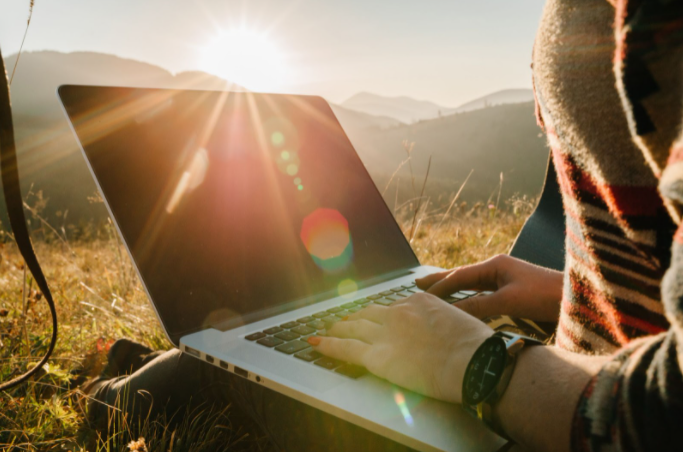
Photo Credit: Adobe Stock
Two years ago, on a Friday afternoon in March, I texted my husband that I was pretty sure the administration where I worked was going to tell us to go home and not come back for the foreseeable future. And I was right.
It was almost like getting a snow day or hurricane day. Part of me said “YAY!” and another part screamed “YIKES.” And so it has been ever since: some things about our new professional world are better, some are worse, some just different.
My recent post to the listserv was this:
Tell me what's better about your job since COVID hit.
Is your schedule more flexible? Are you enjoying a more relaxed work attire? Loving the extra time you have not having to drive or ride to work?
Or tell me what's worse.
Is cabin fever getting the better of you? Do you miss the water cooler? Has your workload quadrupled because others have refused to come back to the office and quit?
It yielded some interesting responses.
My organization has become so much more hybrid work friendly since COVID. They've also saved a ton on real estate, so between employee morale and bottom-line, it's a win-win for all of us. And I would be remiss if I didn't say there is so much added value to having my canine sister Chloe by my side all day. Not only is she a loveable idiot, but whenever I have one of "those" calls or meetings, she's always there for decompression therapy.
Not going to lie: I have a teenager, and that window of time from when he's home from school, yet I'm still trying to get work done, is well, not always rainbows and sunshine. But he'll be old enough to get an afterschool job soon, right? It is a little harder to engage socially, but I've found that if I just make time for it – it happens. I've got a regular monthly, no-work-talk Zoom lunch with my team, and I have Zoom coffee (and cocktail) hours with colleagues.
Cheryl Smith Lintner
Hackensack Meridian Health Foundation
One of the best things that has happened for me in my position at the University of Arizona due to the pandemic was that I showed leadership that a stewardship and donor relations professional could work 100% remotely and still further the program and steward donors.
I have even moved out of state and remain employed for the University, allowing me to meet with donors in my area to help steward them with personal interaction. I believe it has provided an even more collaborative effort between my role and development officers on my team.
Kailey Fatheree
University of Arizona, Eller College of Management
Love the fact that I have no commute and can work from home a few days per week.
Hate the fact that everyone being in the office on different schedules (and sometimes never) has created even more dysfunction than there was before the pandemic. I also miss daily interactions with my team members.
Anonymous
Donor relations and stewardship professionals are creative by nature, and COVID, as devastating as it was on so many fronts, forced us to tap into our innovation gene. How do we keep our donors connected? How do we show them that our institutions are resilient? How do we reinforce how their support is more important than ever?
I, for one, took great pleasure in the renewed flowing of creative juices. We took to the virtual world at a dizzying pace and look what we did! At least at Rutgers, we engaged more donors and alumni than ever before with relevant online events and resources.
Born from necessity: absolutely. But the necessary is now the standard. And it was fun getting here.
Roberta O’Hara
Rutgers University Foundation
What's better (let's start on a high note): COVID forced me to rethink my handwritten thank you notes and replace them with student profiles collected through a Google form. To my surprise, and delight, my response rate went up and the quality soared. I now get long paragraphs extolling student's stories and connections to our school — plus awesome pictures of their internships, pets and families to share with donors.
We've lost people and not gotten them back. We're all doing the work of two or three coworkers for the same pay (less, if you count our missing retirement match). It's not just our office, it's across campus, which means I'm answering questions for financial aid and accounting that shouldn't be coming to me.
What's also worse is that COVID has killed my teenager's ambition and he's flunking high school. I've stayed at my job (private university) through COVID for the tuition benefit down the road. Now, I doubt he'll go to college and I question why I've stayed here for 10+ years.
Anonymous
Yes, our schedules are a bit more flexible. However, they can be even more demanding now, and the lines are blurred when working at home and shutting down for the day, or night. The best part is probably that some areas (maybe healthcare) have even more work-from-home flexibility but it's safe to say we are never going back to a five-day work week. That was a long overdue overhauling of antiquated societal norms.
Work-from-home scheduling, while great for some, has severely impacted the socialization and humanizing of our coworkers because we don't see them much. They begin to become more objectified much like the way people view athletes on television screens as objects and not actual human beings. Consequently, many professionals are feeling tremendously undervalued and are being treated poorly which, in turn, accelerates the vicious cycle of everyone being short and easily annoyed with each other, which leads to mass quitting.
Gian Booker
George Washington University
Now that we're (hopefully) coming to the end of the endless lockdowns and slowly finding our way back to a new normal, there are definitely things I'm looking forward to.
-
Flexibility in my schedule – being able to run out for errands when I can and working my schedule around it
-
Ability to work from various locations (can't wait to actually work from cafes again)
-
Being able to work in my pajamas when appropriate
-
Eating healthier
-
Saving money from not doing daily Starbucks runs, buying lunch, or being enticed to go shopping while downtown
-
Time saved on travel to and from work
-
The immediate change in approach to how we work – creating digital solutions which will help guide new best practices and accessibility practices
What's been worse....
-
Lack of concentration and motivation
-
No delineation between work time and personal time – it's all blurred into one
-
Having my personal space overtaken by work things – what was once my personal den has now become my office
-
Screen time exhaustion – the amount of energy exerted on a simple video meeting, the constant talking over each other, and loud talking to be heard by the mic
-
No social interaction with colleagues – I miss getting to know new staff I'd run into in the kitchen or hallway. Everyone just wants to get off a call when the meeting is over now because we're all tired.
-
Lack of exercise from day-to-day routine
-
In my role, I need to be on site much more than my Foundation team. It's been challenging to navigate our protocols for when I do need to come in, or added work when I've had to travel to site just to take a photo of something.
Dawn Green
CAMH Foundation
Two years after the pandemic we have returned to the office once a week. I understand that we are lucky to have such a relaxed schedule: I have a 45-minute commute and gas is $4.19 a gallon. To fill up my SUV it is over $60. This helps me save money.
I tend to get more work done at home. Before the pandemic hit, a common day for me would be having my office phone ringing, cell phone ringing, on a zoom call, Slack going off, IM going off, getting text messages and I would have a line of people outside my door with questions all at the same time. Although technology is still taking over my life, I don't have as many people calling my direct line and no more drop-in meetings or questions.
The good thing is, I have not bought a suit or business clothes in over two years. I tend to wear relaxing dresses at home and I don't wear make-up anymore. My entire style has changed.
Before the pandemic, I would have after-hour drinks, dinners or get-togethers with my colleagues, normally two or three times a month. At the time, I did not mind them, even enjoyed them sometimes. Now, I absolutely despise after-hours colleague events. I spend 60+ hours a week working and the last thing I want to do is drive 45 minutes away to meet my colleagues at 5 p.m. and then get home at 9 p.m. Spending several years at home has made me better appreciate my home life. I’d much rather be at home with my family.
The other good thing is, I have become closer to my neighbors. I used to leave my house at 4:45 a.m. to go to the gym before I went to work, and I usually got home from work around 8 p.m. I never saw anyone but my family. But now I go for a walk after work and we all have become close.
I have really taken charge of health as well, and I have placed my health before work. All my doctors used to be next to my work and now I have changed many of them to be two miles from my home. Most of my doctor appointments are online. I can either run to the doctor within an hour or take a video call, and I can flex my time.
Overall, the team just works better remotely. They are so much happier and things are getting done. Two staff members had babies during COVID and their home life is so much better since they are working at home 90% of the time.
For worse…
Since 2020 my work has quadrupled. One person quit but overall, we were extremely short staffed before that person quit. Hiring people has massively changed. We used to get 40 to 80 people applying for a position and now the average is more like two to three people. I cannot find qualified people who are willing to move. More and more people are asking for pay raises to keep up with inflation. Some requests are heartbreaking and there is nothing I can do. Everyone received a small pay raise but it just can't keep up with inflation.
Now that we are kind of returning to the office, management wants to have more in-person meetings and team-building events. My team is overwhelmed with work and none of them feels comfortable being in a room with maskless people because they have small children or health problems. Anytime we are required to attend an in-person event, it becomes stressful for most of the team. Everyone is just trying to figure out how to complete their normal work. Overall, fun events are just not fun anymore. All we want to do is get our work done and go home to our families.
Burn out, burn out, and burnout has been a problem with everyone.
Anonymous
What's best:
-
not having to commute
-
never needing to wear high heels
-
the extra time to be able to exercise in the morning and hang out with kids after school in the afternoon
-
being able to be in meetings but turn my camera off if needed
-
the gained trust from senior leaders who never thought their teams could be successful remotely and now recognize that responsible employees are capable of doing their jobs independently
-
more comfort with risk taking/the increased confidence by everyone that we can move fast to innovate and have it be successful. The onset of the pandemic didn't give us time to hum and ha for months on end about what to do in a given situation; we had to figure it out fast and adapt fast. And we did.
-
shared trauma of all of us going through the pandemic resulted in a significant increase in empathy and the blurring lines of work/home life – it's okay to be a full person at work now. We've seen the insides of each other’s houses, got to see everyone's pain in the butt pets who jump on keyboards and bark when the doorbell rings, met kids who just have to say hi anytime they see a camera on... and have still done our jobs!
It is terrible that literally all of us know someone who got ill or died from COVID, but at the same time, that raised everyone's awareness of what people who deal with serious illness or other challenges face every single day, and our workplaces became more understanding and flexible because of it. Biggest shift toward accommodation that I've ever witnessed in the workplace.
What's worst:
-
back-to-back meetings because no one needs to move between offices anymore and everyone seems to have forgotten that humans need “bio breaks” every now and then!
-
harder to get to know colleagues personally
-
missing out on off-the-cuff strategy conversations over lunches and at the water cooler
-
harder to get answers to easy questions because you can't just pop by someone's office
-
the constant pull of work – it being harder to unplug because you know your computer is juuuuuust down the hall and it'll only take a minute to answer that one email…
Kelly Batstone
Children's Hospital of Philadelphia Foundation
Donor relations and stewardship professionals are creative by nature, and COVID, as devastating as it was on so many fronts, forced us to tap into our innovation gene. How do we keep our donors connected? How do we show them that our institutions are resilient? How do we reinforce how their support is more important than ever?
I, for one, took great pleasure in the renewed flowing of creative juices. We took to the virtual world at a dizzying pace and look what we did! At least at Rutgers, we engaged more donors and alumni than ever before with relevant online events and resources.
Born from necessity: absolutely. But the necessary is now the standard. And it was fun getting here.
Roberta O’Hara
Rutgers University Foundation
I was already making the transition to working from home a few months before the pandemic and was looking forward to having an at-home work set up. Quickly, it became cramped and the space I had designated to be my workspace became a shared space with my husband and that was super stressful. Once we figured out how to create separate spaces, it became a bit easier, but still, not having the separation of home and work was tough. Yes, my schedule was more flexible, but we also had to spend a lot of time figuring this part out.
At the start of the pandemic, I was working a part-time job and a consulting job, a perfect match. The aspect that I LOVED the most is having a totally flexible and self-managed schedule. Instead of working as a part of a team, I was working independently on projects. I used to think about our workflow as passing the baton: I had a piece of a larger process that could not be done until gifts were entered. Then I handed it off once my piece was done to the person who then would finish the project – mass and personalized acknowledgments, as an example. It was great when I worked with colleagues who were good about passing the baton and using shared processes. Not always the case once the work expanded.
I do enjoy a more relaxed work attire, though I find that when I dress up and am a bit more put together it does give me a different sense – is it better, is it not? It depends on the day. Working from home opens up possibilities to many personal distractions and having that work attire signals to others who might stop by and be home that it's time for work.
For about a decade now, I have lived and worked within a three-mile radius, and if anything, it served as my exercise. Not having a commute for me means that now I have to incorporate physical activity into my day, and I really did enjoy having that embedded in my commute. Some days I don't leave the house and that can mean that my body suffers as a result.
I do get cabin fever sometimes, and I do miss the water cooler. BUT, I don't know that I miss them more than having the luxury of not having the inevitable office distractions and politics.
A sense of comradery and accountability is minimized by being apart. I get energy from people, and some ideas come from that quick chatter in the hallway. Or a quick question is answered as opposed to having to chase someone down with three emails and two phone calls. Communication can already be a challenge in the workplace, and being remote can bring that invisibility layer to it, in addition to being pulled in more directions than just work.
When I was working part-time, my work did increase when someone was let go, but that worked at the time for me because I had room in my part-time schedule to increase my hours. When I was negotiating that additional time, I made a commitment to not give any less than 28 hours but was also clear that I could not perform more than 28. It worked for some time, but working with full-time colleagues who would be mandated at times to put in additional hours did not make for an equitable workplace. It also can be challenging when you have a workforce who is partially remote and partially in-person. More collegiate relationships form with folks in person – unless there is a tremendous effort to do so remotely, which takes time and thoughtful planning (luxuries in some cases where it's not possible to have these).
There is also a fine line between trusting employees and demanding more accountability measures from them – in written form, as performance evaluations that end up adding more work for the employee than if the managers actually just managed employees with organized and effective check-in meetings and solid communication strategies.
Nayeli Garcia Mowbray
Nonprofit/Donor Relations Consultant/Translator
I am recognizing three phases for me and my team.
The first was reactionary... what has happened and how are we going to get through? We rocked that. Folks were freaked out, but we turned toward one another for answers.
Then came a period of finding a new normal... we found our stride and enjoyed our new flexibility, our sweatpants, and the enormous amount of time saved by not being in transit.
Now, however, we seem to have encountered a period of mental exhaustion and dysfunction, right when there is so much more to do! I'm seeing a lot of confusion over anything new, ineffective communication, and a general lack of insight and empathy into what is going on outside our individual bubbles.
What I wouldn't give for a full week, in a real office, with everyone there at once, dressed to the nines recalling the superstars we really are!
Anne Manner-McLarty
Heurista
(Heurista and Eleven Fifty Seven surveyed donor relations professionals to identify immediate effects of COVID-19 stay-at-home regulations on the work of thanking donors and to forecast anticipated changes in donor relations practice. Questions explore the role of technology in team function, communication with and about donors, the impact on donor recognition and stewardship at large, and what changes may be on the horizon for the field of donor relations. To read survey findings, which are based on 36 long-form responses from 93 invitations sent by email from April 28, 2020 through May 25, 2020, visit ThankingDonors.net.)
The flexibility! I never realized what I was missing. Of course, much of this lies with my new employer.
At the beginning of the pandemic, I felt stressed beyond belief, having to re-learn how to do my job while dealing with daily tech issues, feelings of isolation, and never fully detaching from work. There was no work-life balance with my laptop ever present and email demands coming at all hours.
I switched employers toward the middle of the pandemic, and it's been a revelation. Our office is truly hybrid – I can be in the office space or work from home/anywhere else at any time because of excellent tech and trusting leaders. I now only make the 30-minute commute (one hour total), two days a week or fewer, and I'm more productive – more time on the work, less time on the road – and happier, because I'm spending more time with my family and actually have time to go to a gym!
We use minimum paper (our files are all electronic) and it's easy to meet with our affiliates all over the U.S. and in Latin America through Teams. Grant writing is efficient because we work in SharePoint and can edit and discuss in real time. The bright side of COVID is that some organizations, like mine, did use the opportunity to re-think how their employees work.
Noel Schiber
Boys Hope Girls Hope
What’s better:
More flexibility in terms of start and end times of work, hybrid/flexible work location (ability to choose a few remote days per week).
What’s worse:
Managing a remote team has many challenges. Accountability is more difficult. Having more flexible schedules means that finding times for larger group meetings (even on Zoom) is difficult. It’s a struggle to get staff back to campus, and campus is eliminating individual office spaces for those working hybrid schedules (not the best time for shared offices!). Staff is generally more difficult to engage via zoom or phone.
Also, pandemic-related challenges with vendors means increased pricing due to difficulties sourcing typical supplies. Even our cut lettering vendors have been harder to schedule and they require longer times for production.
Anne Schmitz
Stony Brook University
I don't have to pay as much for gas and parking expenses, and the shaved commute time means I get more exercise in the week (hello Peloton!). As an introvert, I'm more productive at home because I can focus my energy on projects, and I'm not so drained at the end of the day from being "on" and putting on an "I'm a professional" show eight hours a day!
Also as a working parent, it's easier to manage a home while working remotely because I can throw laundry in between meetings, and instead of taking a break walking to a local coffee shop, I just fold and get the laundry done. Fewer chores on the weekend, but actually without losing net productivity. WIN! Weekends have been more relaxing as a result.
Also spending way less on lunches! And with inflation, gas prices, and rising real estate, these cost savings really are appreciated.
What's worse
Communication has been a major challenge, especially when trying to navigate conflict. You can't read body language or verbal cues through chat and email. I think by chat, behind the safety of a screen, people are either more likely to use aggressive language OR more likely to completely avoid a conversation, whereas in person, people would be more likely to acknowledge another person in a professional manner / handle a situation more diplomatically.
My relationships are the core of what makes good work feasible: a solid foundation of trust, respect, and even fun. Relationships I have in the office have eroded over the past two years, so even though I'm an introvert, I make an effort to come into the office at least once a week to have lunch, coffee, and walks with people because I crave more positive social interactions.
Margaret Stutt, CFRE
Haas School of Business, University of California, Berkeley
I took a quick poll around the office. Overwhelmingly, the best thing about post-COVID work is more flexibility. The worst is that boundaries have been blurred because we're always available. Coming in a close second on the "worst" list is traffic.
Some personal thoughts:
-
Office gossip was almost non-existent during COVID which was a great thing!
-
When we came back to the office, I initially resented people stopping by my office to ask a question or just say hi. I had gotten used to scheduling these encounters during COVID and it took a while to get used to the work interruptions again. (Not my proudest moment(s).)
-
There is added focus on transparency and accountability which is putting more stress on our donor relations team. The rise in expectations has not been accompanied by a parallel rise in resources, though. Darn it.
-
Hybrid work is harder than I anticipated. One hundred percent of my work life is in a backpack that goes home with me every night.
-
I loved Zooms when everyone was home and we would occasionally see kids and pets and spouses. It made people seem real and not just an animatron on the screen.
Overall, I think we are still learning what work will look in a post-COVID world. I don't think it will be exactly like it was before, so this is an excellent opportunity for us all to help shape the future of our spaces, our expectations and our office cultures.
Jessica Davies
University of Maryland, Robert H. Smith School of Business
And from yours truly –
Right now, I am sitting in my home office, wearing slippers and yoga pants but with my hair styled and lipstick applied (because some things never change), dogs dozing cozily at my feet. We routinely go on walkies three times a day, and I’m able to do a load of laundry when I feel like it.
My part-time job as a writer is remote. I also have donor relations clients and I have been providing advancement writing training, exclusively remotely. All possible because remote work is now not only possible, it’s preferable in many cases. No one has to pay you to come to them if you can accomplish the same work virtually. Two years ago, this type of arrangement would have been significantly more challenging.
The downside? I talk to myself and the dogs more than I should. (“Isn’t that right, Marco and Bo?”) And when I do talk to a person in person, I tend to babble endlessly and awkwardly. (Can you forget how to talk to people? Is that a muscle I need to retrain?) I have closets full of clothes and shoes that I’ll probably never wear again but just can’t seem to part with. And Amazon is addictive. But overall, I consider myself a lucky duck.
As we mark our two-year anniversary with the pandemic and note things that are better and things that are worse, here’s hoping we continue to focus on the better list and do what we can to live with the worse.
Debbie Meyers
Writer/Editor, Rutgers University Foundation
We would love to hear your voice and benefit from your experience, so please consider submitting an article to The Hub!
Back to the March 2022 Hub
|